Frame the decision
Begin with the business decision—not a generic control list. Define the material scenarios, stakeholders, and boundaries that matter.

Our approach
We make the line between what is documented, what is demonstrated, and what remains unknown visible to the people making the decision.
Begin with the business decision—not a generic control list. Define the material scenarios, stakeholders, and boundaries that matter.
Distinguish written intent from operating reality through interviews, artifacts, configuration evidence, and authorized validation.
Test whether coverage, dependencies, exceptions, and failure scenarios support the confidence leadership has been given.
Connect technical findings to business consequence, sequence the work, and identify accountable decision owners.
How findings are framed
Directly supported by the evidence reviewed.
Necessary context that was represented but not independently demonstrated.
A material question the available evidence could not answer.
Systems, periods, or tests outside the agreed scope.
Additional work that could reduce uncertainty or validate remediation.
Independent by design
Our work is designed to serve the client’s decision.
We disclose relationships that could affect our advice. Assessment and optional implementation are separated in scope, and prior involvement is made clear when independent validation is required.
A note on AI
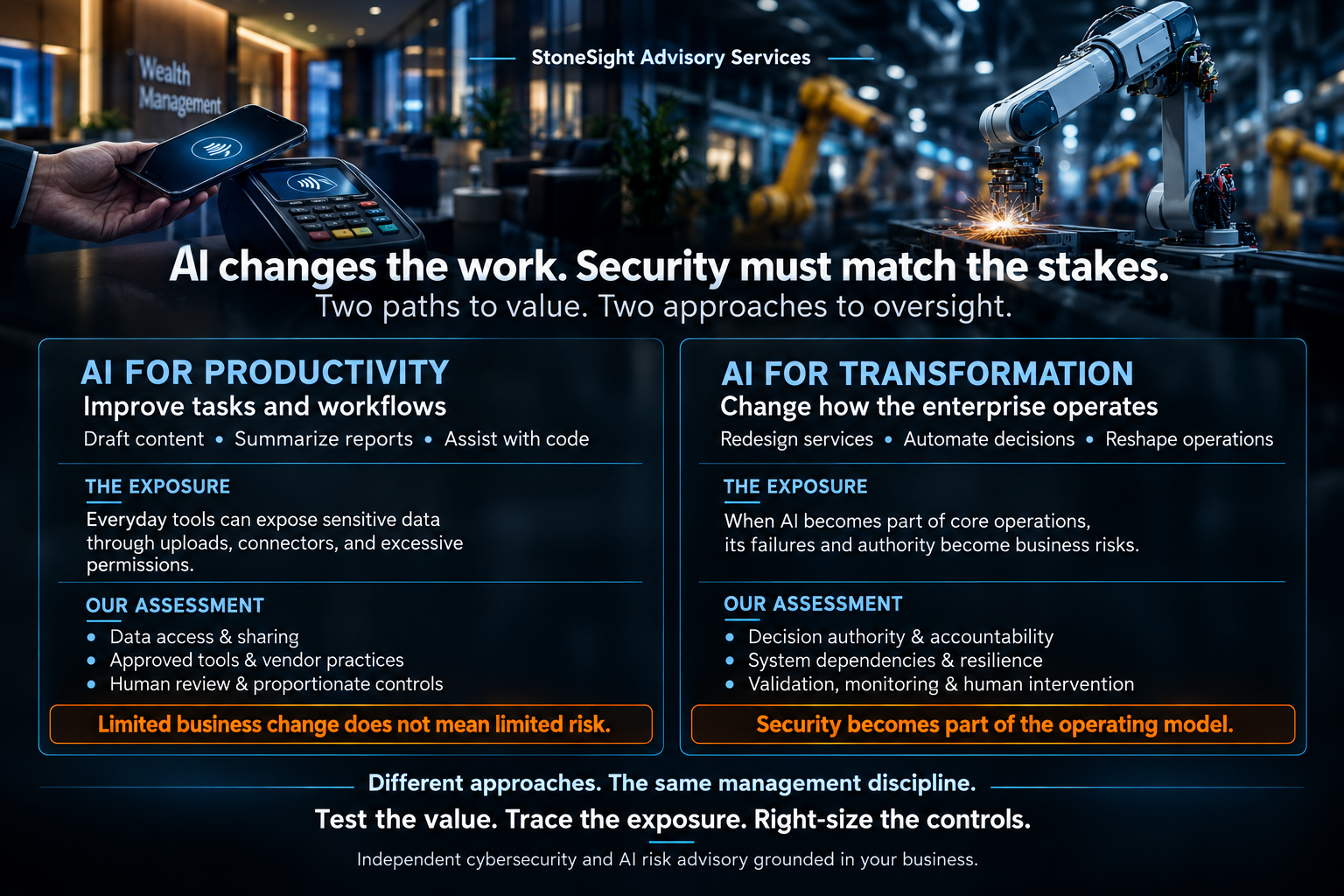
We have created AI policies for our customers, and we frame every engagement around a simple distinction: is the AI in use there for productivity—improving tasks and workflows—or for transformation—changing how the enterprise operates? We cover both scenarios in our assessments and help companies chart a secure path that maximizes the value of AI with minimum risk.
Start a conversation
Tell us about the transaction, security question, or leadership need you are working through.
Discuss your priorities